
Back to Research and Newsletters
Why Slow Movements Often Heal Better Than Fast Ones
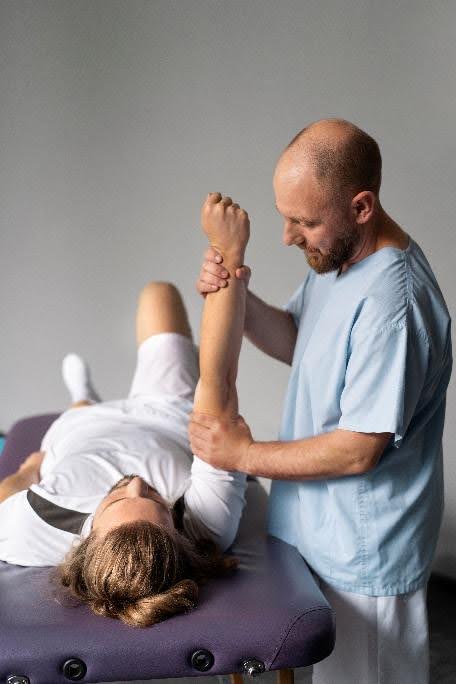
In a world obsessed with speed, rehabilitation quietly rewards slowness.
Slow, deliberate movement gives the nervous system time to sense, adjust, and learn.
When movements are rushed, the brain relies on reflexes and momentum. When movements are slow, the brain stays involved.
This is why beginners wobble when asked to move slowly but feel stable when they move fast. Speed hides errors. Slowness exposes them.
For recovery, exposing errors is essential.
Slow movement improves:
-
Proprioception (the sense of body position)
-
Coordination between muscles
-
Accuracy of force control
-
Awareness of asymmetry
This is not weakness. It is neural refinement.
Rehabilitation that emphasizes controlled slowness allows the brain to recalibrate internal maps of the body. These maps are often distorted after injury, surgery, or prolonged pain.
Interestingly, once the brain relearns accuracy at slow speeds, speed returns naturally.
Healing is not about rushing back to function.
It is about rebuilding precision first.
Sometimes, slowing down is the fastest way forward.